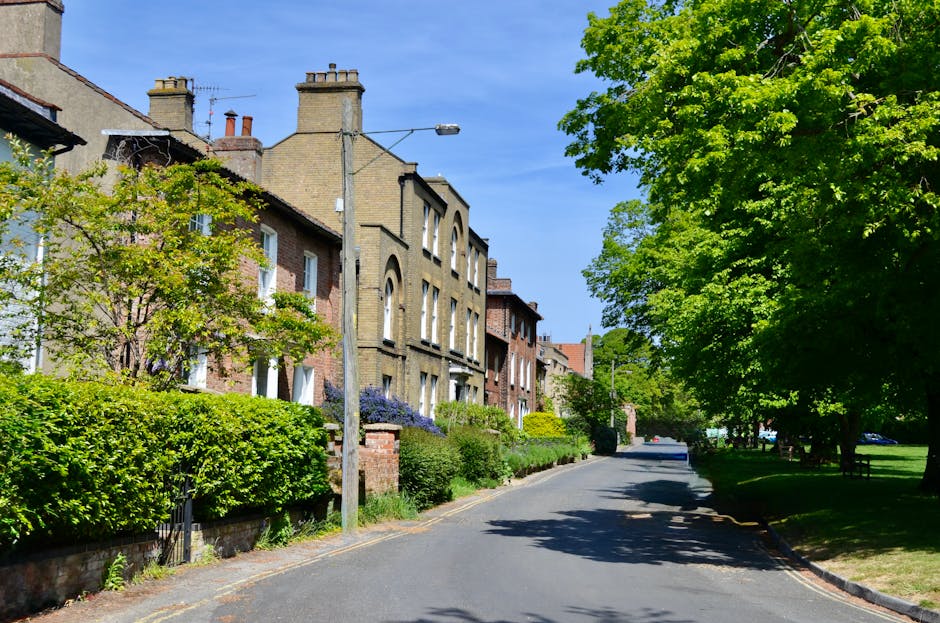
Anerley Road Removals: Narrow-Street Moving Tips
A move on a tight residential road can feel simple on paper and awkward in real life. Anerley Road removals often involve parked cars, limited turning space, shared access, and neighbours who still need to get past your front door. The good news is that narrow-street moving is very manageable if you plan the route, the loading order, and the vehicle size with care.
This guide focuses on practical, real-world moving tips for narrow streets, especially if you are dealing with a long terrace, a busy road edge, or awkward access near Anerley Road. You will find step-by-step advice, common mistakes to avoid, and sensible ways to reduce stress on moving day. If you want a wider service overview while planning, you can also explore home moves support, house removalists, or a flexible man and van service for smaller loads and tighter access.
Table of Contents
- Why Anerley Road Removals: Narrow-Street Moving Tips Matters
- How Anerley Road Removals: Narrow-Street Moving Tips Works
- Key Benefits and Practical Advantages
- Who This Is For and When It Makes Sense
- Step-by-Step Guidance
- Expert Tips for Better Results
- Common Mistakes to Avoid
- Tools, Resources and Recommendations
- Law, Compliance, Standards, or Best Practice
- Options, Methods, or Comparison Table
- Case Study or Real-World Example
- Practical Checklist
- Conclusion
- Frequently Asked Questions
Why Anerley Road Removals: Narrow-Street Moving Tips Matters
Narrow roads change the whole shape of a move. A van that would be fine on a wider street can become a problem if it blocks access, cannot park close enough, or takes too long to load. On a road like Anerley Road, the issue is rarely just distance. It is timing, positioning, and keeping the move calm while other road users still need to pass.
That matters for a few reasons. First, delays can quickly build up when a vehicle cannot stop exactly where you want it. Second, carrying furniture further than expected increases the risk of knocks, scratches, and back strain. Third, in a tight street, your move affects neighbours, pedestrians, and sometimes local traffic flow. A little forethought keeps everyone happier, which is no small thing when the hallway is full of boxes and the kettle is still packed.
There is also a planning benefit that people sometimes miss. When you prepare for a narrow-street move properly, you often discover you need less time, fewer trips, and a smaller vehicle than you first assumed. That can make the whole job more efficient and, in many cases, more affordable.
How Anerley Road Removals: Narrow-Street Moving Tips Works
The basic idea is simple: reduce the distance between the property and the vehicle, reduce unnecessary handling, and make every part of the move more predictable. In practice, that means matching the vehicle to the street, arranging access in advance, and packing in a way that supports quick, safe loading.
A narrow-street move usually works best when you think in layers:
- Street access: Can a van stop without causing a major obstruction?
- Property access: How far is the front door from the parking point?
- Furniture flow: Which items should go out first so the route stays clear?
- Timing: When is the road quietest and easiest to use?
- Equipment: Do you need trolleys, blankets, straps, or a smaller vehicle?
For many households, a flexible vehicle choice is the difference between a tidy move and a stressful one. A smaller moving truck can be a smarter fit than a large rigid lorry on a tight residential road. In some cases, people choose man with van support because the load is manageable and access is awkward. That does not mean bigger vehicles are never useful; it just means the street should shape the plan, not the other way round.
One useful rule of thumb: if you would hesitate to reverse something large into the road, treat that hesitation as valuable information rather than an inconvenience. It usually is.
Key Benefits and Practical Advantages
Good narrow-street planning delivers more than convenience. It protects the move itself.
- Less carrying distance: That means less fatigue and less chance of damage.
- Faster loading: You waste less time walking furniture in and out.
- Lower risk of congestion: Neighbours and passing traffic are less likely to be affected.
- Better protection for furniture: Fewer tight turns and fewer pauses reduce accidental bumps.
- More accurate quoting: When access is clear, the mover can estimate time and resources more sensibly.
There is another practical advantage: confidence. When you know exactly where the vehicle will go, who will carry what, and how the route works, the move feels controlled. That matters on a day when even small uncertainties seem louder than they really are.
For some homes, especially with heavier items or multiple floors, professional help from packing and unpacking services can also speed things up. Well-packed boxes and properly wrapped furniture travel more safely through confined access points.
Who This Is For and When It Makes Sense
This approach is ideal if you are moving from a terraced house, maisonette, flat, or any property on a road with restricted parking or a narrow carriageway. It also makes sense if your furniture includes bulky items such as wardrobes, sofa beds, dining tables, or office equipment that is awkward to manoeuvre through tight spaces.
You may especially need narrow-street moving tips if:
- there is no driveway or loading bay;
- parking is limited to one side of the road;
- cars regularly line both sides of the street;
- the front entrance opens directly onto the pavement;
- you are moving during school-run or commuter hours;
- you need to keep disruption to neighbours as low as possible.
Businesses can benefit too. A small office, clinic, or studio in a compact location may need a careful, staged move rather than a single rushed loading session. If that sounds familiar, a dedicated office relocation service can help you protect equipment, manage timing, and keep disruption under control. For larger business moves, commercial moves are often best planned with the same access-first mindset.
In short, this is for anyone who wants the move to fit the street instead of forcing the street to fit the move.
Step-by-Step Guidance
Here is a practical way to approach a narrow-street removal without losing the plot halfway through. The sequence matters.
1. Survey the street before moving day
Walk the route from the property to the nearest sensible stopping point. Look at parked cars, lamp posts, low branches, tight corners, and places where two vehicles would struggle to pass. If possible, check the road at the time of day you plan to move, because a street can feel completely different at 8 a.m. than it does at midday.
2. Measure the largest items and the doorways
Do not assume the sofa will "probably fit." Measure it. Then measure the front door, stairwell bends, hallway width, and any awkward landing points. This is one of those dull jobs that saves a surprising amount of stress later.
3. Match the vehicle to the access
A smaller van may be easier to place close to the property than a larger lorry. If your move is straightforward but the road is tight, a man and van option can be a practical choice. If you have a bigger load but still difficult access, ask about vehicle size, turning needs, and loading approach before booking.
4. Pack for fast, safe loading
Boxes should be sealed, labelled, and grouped by room. Loose items are awkward on narrow front paths because they slow everyone down. Keep essentials separate so you are not hunting for phone chargers, medication, or documents while the van is waiting.
5. Clear the immediate exit route
Move anything that can snag or obstruct: coat stands, shoe racks, rugs, bins, potted plants, and small furniture. A clean path is especially important where the front door opens almost directly onto the pavement.
6. Decide the loading order
Load the largest and least flexible items first, then the boxes that can stack neatly around them. This is not just about space in the vehicle. It also makes carrying easier when the doorway and street are tight, because you avoid awkward repacking at the kerb.
7. Protect the street and the property
Use blankets, floor protection, and straps where needed. Narrow streets often mean tighter turns and more contact points, so protecting corners and frames matters more than usual. A small bit of prevention beats a scratched banister every time.
8. Keep communication simple on the day
One person should direct the move. Too many voices in a tight space can create confusion fast. Short instructions work best: "pause," "lift," "turn," "clear," "load next." Clean, calm communication keeps the pace smooth.
Expert Tips for Better Results
Some of the best narrow-street moving advice is not dramatic. It is small, practical, and grounded in experience.
- Book the earliest sensible slot. A quiet road is easier to work in, and neighbours tend to be more forgiving before the day gets busy.
- Use smaller carrying teams for tight interiors. Two people can sometimes move a large item more safely than four people trying to squeeze past each other.
- Label by destination room. Not just "kitchen" or "bedroom," but "kitchen - fragile" or "bedroom - first use."
- Keep stairways clear. Narrow streets often come with narrow halls; clutter multiplies problems quickly.
- Prepare a parking backup plan. If the nearest spot is unavailable, know where the next-best location is.
- Wrap awkward corners first. Sofa arms, table edges, and wardrobe tops usually suffer first in a tight move.
In our experience, the most successful moves are the ones where someone has thought about the next bottleneck before it appears. That might be the front step, the gate latch, the awkward bend in the hall, or the van door opening onto a sloping kerb. Small details. Big difference.
If you are juggling a full house and a narrow access point, you may also find it helpful to pair moving help with removal truck hire when the volume of items justifies it, or to use furniture pick-up for single bulky pieces that need careful handling.
Common Mistakes to Avoid
Most problems on narrow roads are predictable. That is actually good news, because predictable problems are usually avoidable.
- Choosing the wrong vehicle size: Bigger is not always better if the road is restrictive.
- Assuming parking will sort itself out: It rarely does.
- Leaving packing until the last minute: Loose or half-filled boxes create chaos at the door.
- Ignoring neighbours and access flow: A move that blocks every entrance creates avoidable friction.
- Forgetting the return trip: You may need a second load, and the parking space may not still be available.
- Not checking the route for low obstacles: Branches, signs, and parked vehicles can matter more than you think.
- Loading in the wrong order: If essentials end up at the back, the whole move slows down.
One common trap is optimism bias: "It should be fine." Sometimes it is. But on a tight road, "should" can be expensive. Better to verify first and move once than guess and rearrange later.
Tools, Resources and Recommendations
A narrow-street move usually goes better with a few simple tools. Nothing exotic. Just practical gear that reduces friction.
| Tool or resource | Why it helps | Best use case |
|---|---|---|
| Furniture blankets | Protects edges, frames, and polished surfaces | Sofas, wardrobes, tables, mirrors |
| Ratchet straps | Stops movement in transit | Long or heavy items in the vehicle |
| Hand truck or trolley | Reduces carrying strain | Box stacks, appliances, medium furniture |
| Floor runners | Protects hallways and thresholds | Shared entrances and tight front paths |
| Labels and markers | Makes unpacking and room placement faster | Every move, especially multi-room homes |
As a planning resource, a specialist mover can save time by estimating access properly. If you are comparing support options, look at how clearly the service explains loading, packing, and vehicle choice. A transparent provider is usually easier to work with than one that glosses over the awkward bits. For more background on the team and how they work, see about us.
If you are moving beyond Anerley Road and want a local alternative in another part of South London, related area pages such as Storage Colliers Wood and Storage Crystal Palace can also be useful for comparing nearby service coverage and moving options.
Law, Compliance, Standards, or Best Practice
For most residential moves, the main compliance issues are practical rather than legal. Still, best practice matters. You should avoid causing unnecessary obstruction, keep paths safe, and respect property boundaries and neighbours' access. If you are arranging temporary parking on a narrow street, it is sensible to check local council expectations in advance rather than assume informal arrangements will be accepted.
Where vehicles, lifting, or loading are involved, reputable removal firms will usually follow standard safety practices such as safe manual handling, proper securing of goods, and clear communication around hazards. That is especially important for awkward furniture, appliances, and anything fragile.
If you are moving from a rented property, review your own tenancy obligations and the move-out condition requirements in your agreement. If you are moving a business, make sure the relocation does not interrupt building access, emergency routes, or site rules. For terms, service limits, and booking conditions, it is wise to review terms and conditions before confirming anything.
Nothing glamorous here, but it is the kind of groundwork that keeps the day smooth and avoids needless surprises.
Options, Methods, or Comparison Table
Different moves suit different setups. On a narrow street, the best option is often the one that balances access, volume, and time rather than simply the cheapest line item.
| Option | Best for | Strengths | Limitations |
|---|---|---|---|
| Man and van | Small to medium moves with tight access | Flexible, quick, easier to position | Less capacity for very large loads |
| Small moving truck | Moderate household moves | More space, still manageable on some narrow roads | Parking and turning require more care |
| Full removal truck | Larger homes or heavier inventory | High capacity, efficient for volume | May be difficult on restrictive streets |
| Hybrid approach | Complex access with mixed load sizes | Balances access and capacity across multiple runs | Needs more coordination |
If your priority is simplicity and access, a smaller vehicle often wins. If your priority is fewer trips, you may want a larger capacity option. The right answer depends on street layout, volume, and how much lifting you want to avoid. If you are unsure, ask for a recommendation based on access photos rather than guessing.
Case Study or Real-World Example
Consider a typical scenario: a two-bedroom flat on a narrow residential road with parked cars on both sides. The entrance opens directly to a short pavement, then a few steps up to the front door. There is no driveway, and the staircase inside includes one awkward turn.
The move goes best when it is treated as an access-led job rather than a volume-led job. In this type of situation, the team might:
- arrive early to catch a quieter stretch of road;
- use a smaller vehicle positioned as close as possible without blocking driveways;
- move fragile and bulky items first, while the route is still clear;
- keep a second person at the door to coordinate the handoff;
- load boxes by room so unloading is quicker at the new address.
The result is usually less waiting, less double-handling, and fewer opportunities for damage. It is not about rushing. It is about removing friction before it becomes a problem. That is what good narrow-street moving really looks like.
And yes, the kettle still tends to be the last thing you find. That part seems to be a universal law of moving house.
Practical Checklist
Use this checklist to keep your move organised and street-friendly.
- Confirm the moving date and arrival time.
- Check the narrowest parts of the route from door to vehicle.
- Measure large items and doorways.
- Choose the most suitable vehicle size.
- Reserve or identify the best parking position.
- Tell neighbours if access may be temporarily limited.
- Pack and label boxes by room.
- Set aside essentials for the first 24 hours.
- Clear hallways, stairs, and the front exit.
- Protect floors, corners, and fragile items.
- Keep keys, documents, and chargers separate.
- Have a backup plan if the closest parking spot is taken.
Expert summary: The best narrow-street removals are usually won by planning, not force. If the vehicle, packing, and access plan all fit the street, the rest of the day becomes much easier.
If you are still deciding how much help you need, a quick conversation with a removal specialist can clarify whether a van, truck, or full packing service makes the most sense for your address.
Conclusion
Anerley Road removals are not difficult because of the distance. They are difficult because the environment asks for better planning. Narrow streets reward calm preparation: the right vehicle, the right parking position, the right loading order, and a simple plan for access.
Once you treat the street as part of the move, not just the route to it, everything becomes easier. You reduce stress, protect your belongings, and make life simpler for everyone around you. That is the practical advantage of getting narrow-street moving tips right.
If you want tailored help for a compact or awkward access move, the next step is straightforward: compare your load, check your access, and speak to a removal team that understands tight residential streets.
Get a free quote today and see how much you can save.
Frequently Asked Questions
What makes a narrow-street removal different from a normal house move?
The main difference is access. On a narrow street, parking, turning space, and carrying distance matter much more. That can affect vehicle choice, timing, and how items are loaded and unloaded.
Should I choose a man and van service for a tight residential road?
Often, yes, if your move is modest in size or the road is especially restrictive. A smaller vehicle is usually easier to position close to the property, which reduces carrying distance and delays.
How do I know what size vehicle I need?
Start with the volume of furniture and boxes, then factor in access. A larger vehicle can be efficient, but if it cannot park safely or manoeuvre easily, a smaller option may work better overall.
What should I do about parking on moving day?
Plan it in advance. Identify the best possible stop point and a backup location if needed. If parking is uncertain, tell your mover early so they can adapt the loading plan.
Is it worth measuring doorways and stairs before the move?
Absolutely. Measuring large items and tight access points helps prevent last-minute surprises, especially with sofas, wardrobes, appliances, and awkward stair turns.
How can I reduce damage when moving through a narrow hall?
Clear the route, use protective covers, and assign one person to direct movement through tight areas. Slow, controlled turns are safer than trying to rush bulky items through.
Can packing services help with narrow-street removals?
Yes. Well-packed boxes are easier to load, stack, and carry. If access is difficult, structured packing can save time and reduce handling issues on the day.
What if my street is blocked by parked cars?
That is common on residential roads. Build in extra time, consider a smaller vehicle, and plan a safe loading point before moving day. A good mover will help you adjust if the nearest space is unavailable.
Are there any rules I should check before moving?
You should review your tenancy or lease obligations if relevant, and check local parking or access expectations if you need to occupy road space. For service terms, it also helps to review provider conditions before booking.
What items are hardest to move on a narrow street?
Large sofas, wardrobes, mattresses, and heavy appliances tend to be the most awkward. They need careful handling, especially if the route includes steps, tight corners, or a long carry to the vehicle.
How early should I book a removal service for a difficult access move?
As early as you can, especially if you need a particular date or a specific vehicle size. Early booking gives you time to discuss access, packing, and any street-specific concerns.
Can a narrow-street move still be efficient?
Yes. In many cases it can be very efficient if the access plan is right. The key is to reduce guesswork, keep the load organised, and choose the moving method that suits the street rather than forcing a one-size-fits-all approach.