Small Staircases? Moving Large Furniture on Westow Hill
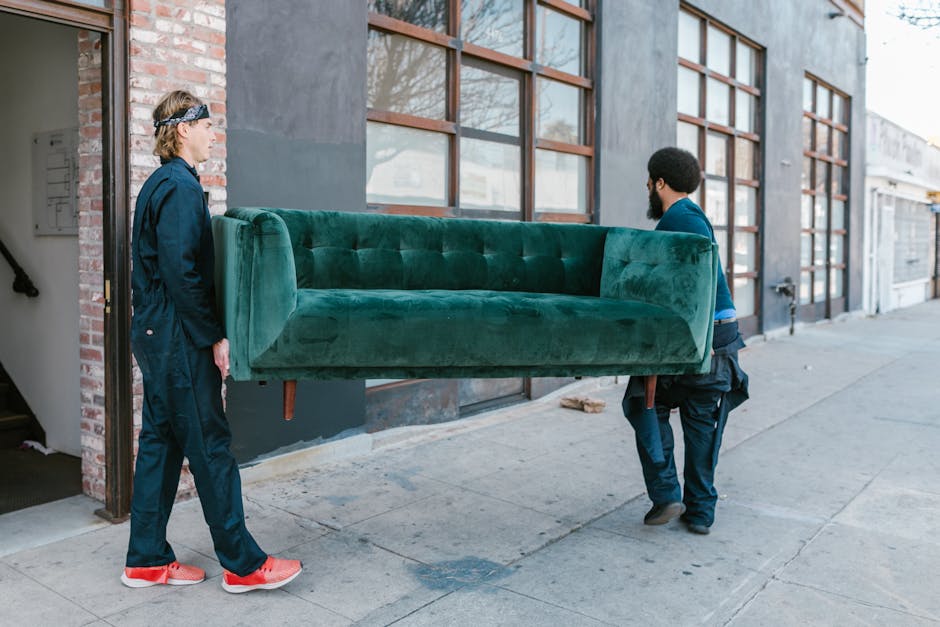
If you have ever tried to turn a sofa, wardrobe, or dining table on a tight stairwell, you already know the feeling: the room suddenly goes quiet, someone says "bit of a squeeze," and everyone starts measuring in their head. On Westow Hill, where older homes and compact staircases are part of the charm, small staircases and large furniture can create a moving challenge that is more awkward than dramatic - until it isn't.
This guide breaks down how to move bulky items through narrow stairs safely, what professional movers actually do differently, and when it makes sense to bring in extra help. If you are planning a house move, a one-off furniture pickup, or you simply need a reliable way to get an oversized item upstairs without scuffing the walls, this article will help you make sensible decisions.
For readers planning a broader move, it may also help to look at home moving support or the wider range of man and van services available locally. Let's make the awkward part feel manageable.
Why Small Staircases? Moving Large Furniture on Westow Hill Matters
Small staircases matter because they change the whole moving plan. A large item is not difficult only because it is heavy. It is difficult because it is bulky, awkwardly shaped, and often impossible to keep upright on a tight turn. On Westow Hill, where many properties have narrow landings, steep internal stairs, and slightly uneven walls, that problem shows up fast.
What makes it worth thinking through properly? A careless lift can lead to damaged banisters, cracked plaster, stripped paint, or worse, a personal injury. And unlike a simple flat move, stairway moves demand judgment. You need to know when to tilt, when to pivot, when to pause, and when to stop before you force the issue.
There is also a timing issue. The longer a move drags on, the more likely something gets knocked, scratched, or dropped. In our experience, a well-planned stair move often looks calm from the outside, but that calm is doing a lot of work. It comes from measuring, clearing, and choosing the right route before anyone lifts a corner.
For some households, the safest answer is to use trained help through house removalists. For others, a smaller crew with the right vehicle, such as man with van support, is enough. The key is matching the method to the staircase, not the other way around.
How Small Staircases? Moving Large Furniture on Westow Hill Works
The basic principle is simple: reduce risk before you reduce the item through the staircase. That means planning the route, checking dimensions, protecting surfaces, and using the correct lifting technique. On paper, it sounds straightforward. In practice, a narrow stairwell can turn a normal sofa into a three-dimensional puzzle.
A good moving plan usually starts with the item itself. Is it solid wood, flat-pack, upholstered, or fragile? Can it be dismantled? Are the legs removable? Does the headboard separate from the bed frame? These questions matter because a furniture piece that can be broken down by a few inches may go through safely, while one left intact may not fit at all.
Then comes the staircase. Movers look at the width of the steps, the depth of the landing, the headroom, and the angle of the turn. A straight staircase is one thing. A turn after three steps, with a low ceiling and a radiator at the bend, is another. Truth be told, that is where the real skill shows.
Professional teams also think about the path before and after the staircase: front door clearance, hallway width, grip on the floor, weather conditions outside, and whether a parked vehicle is close enough to reduce carrying distance. If you need a larger vehicle for awkward loads, moving truck options or removal truck hire can make the whole process smoother.
And yes, sometimes the answer is not "lift harder" but "change the angle." That tiny shift can be the difference between a clean pass and a scratched wall.
Key Benefits and Practical Advantages
When the staircase is small, getting the method right saves more than time. It protects your furniture, your home, and your nerves. That is no small thing on moving day.
- Less damage to walls and bannisters: A controlled lift with padding and a clear route reduces the chance of scrapes and chips.
- Safer for everyone involved: Bulky furniture on stairs can shift suddenly. Good planning lowers the risk of slips and strains.
- Better use of time: A quick assessment prevents repeated failed attempts, which are exhausting and frustrating.
- More chance of keeping the item intact: Many awkward pieces can be moved successfully if they are partially dismantled or rotated correctly.
- Cleaner finish: Fewer knocks mean less touch-up work after the move. You notice this especially with older plaster and painted woodwork.
There is also a less obvious benefit: confidence. Once you know the item will fit, or you know exactly how it will be moved, the whole day feels less chaotic. That matters. Moving is already a bit too much, if we're honest.
If you are moving household contents as part of a larger relocation, services like packing and unpacking services can also reduce pressure on the day. Less clutter in the rooms usually means easier stair access too.
Who This Is For and When It Makes Sense
This topic is relevant to anyone dealing with furniture that is too large for a standard lift-and-carry on a staircase. That includes flat owners, tenants moving out of older terraced homes, families changing a bedroom set, and businesses shifting bulky office furniture into upper floors.
It makes particular sense if you are handling:
- sofas with fixed arms or deep frames
- wardrobes and large cupboards
- beds, mattresses, and headboards
- dining tables and solid chairs
- desks, filing cabinets, and office storage
- white goods that need careful manoeuvring
It also matters when access is tricky but the item itself is not extraordinary. Sometimes a piece is not especially heavy, just awkward. Those are the ones people underestimate. They look manageable in the showroom, then suddenly dominate a narrow hallway like it owns the place.
For business moves, the same logic applies. If you are relocating stock, shelving, or desks upstairs, commercial moves and office relocation services can be a better fit than trying to improvise a one-off lift.
Step-by-Step Guidance
Here is the practical way to approach a move on a narrow staircase. Not glamorous, but it works.
- Measure the furniture first. Note the height, width, depth, and any protruding parts like handles or legs.
- Measure the staircase and landing. Check the narrowest point, the turn, and the headroom. Do not guess. Guessing is how people end up staring at a sofa wedged halfway up the stairs.
- Decide whether the item can be dismantled. Remove legs, shelves, doors, or other detachable parts where safe to do so.
- Clear the route. Take away rugs, shoes, plants, bins, and anything else that might shift underfoot.
- Protect the property. Use blankets, corner protection, and floor coverings where needed.
- Assign roles before lifting. One person leads, one steadies, and one watches clearance if three people are available.
- Move slowly through the tightest point. Pause before the turn. Reposition. Communicate. Then continue.
- Stop if the item jams. Forcing it is how damage happens. Reassess the angle or dismantle further.
- Recheck the landing and room entry. The staircase is only part of the route. The room doorway can be just as awkward.
If you need extra muscle for the carry, a local man and van setup is often suitable for one-off pieces and short-distance handling. For larger loads, the vehicle choice matters just as much as the manpower.
Expert Tips for Better Results
Small staircases reward patience and a bit of practical common sense. Here are the things that usually make the biggest difference.
- Use a tape measure and not "eyeballing it." It sounds obvious. Still, plenty of people try the move first and measure later.
- Take doors off where possible. A few extra inches can solve more than one problem.
- Protect contact points. Furniture pads, blankets, and wrap are cheaper than repainting a wall.
- Wear proper footwear. Good grip matters on stairs, especially if the weather has made the entrance damp.
- Use a pause point. A landing can be useful for resetting your grip. That breathing space helps more than people expect.
- Don't rush the first move. The first lift sets the angle for the whole carry.
A small human aside: the fastest move I have ever seen on a tight staircase was still the one that moved at a slow, careful pace. Funny, that. Careful is often quicker than frantic.
One more thing: if you suspect the item is not going through without a tilt that feels unsafe, do not talk yourself into it. That "one last try" is a classic trap.
Common Mistakes to Avoid
Most staircase damage does not come from one giant mistake. It comes from a few little ones stacking up.
- Skipping measurements: This is the big one. Without dimensions, you are working blind.
- Ignoring the landing: A sofa may fit the stairs and still fail on the turn.
- Not clearing the route: One loose shoe or bag at the wrong time can cause a wobble.
- Trying to force the lift: If the item is stuck, the solution is usually angle, dismantling, or a different route.
- Underestimating weight distribution: Some furniture is heavier on one end, which changes balance fast.
- Using too few people: If the item is large and the stairwell is tight, an extra pair of hands can be the difference between smooth and stressful.
People also forget to protect the destination room. It is not just about getting the piece up the stairs; it is about getting it into place without chipping the final corner on the doorway. That last metre can be oddly nasty.
Tools, Resources and Recommendations
You do not need a warehouse full of equipment, but the right basics help a great deal.
| Tool or Resource | Why It Helps | Best Use |
|---|---|---|
| Measuring tape | Confirms whether the item and staircase will work together | Before any lift or booking |
| Furniture blankets | Protects edges, doors, and painted surfaces | For sofas, wardrobes, tables, and cabinets |
| Straps | Helps with controlled lifting and carrying | For heavier or uneven items |
| Floor protection | Reduces scuffs and slips in hallways and landings | On polished wood, laminate, or carpeted stairs |
| Disassembly tools | Lets you remove legs, panels, or fittings safely | For large flat-pack or modular furniture |
If the item is too bulky for a simple hand carry, the vehicle side of the move matters too. Depending on volume, a moving truck or a more flexible removal truck hire arrangement can be the practical choice. For single-item collections, a smaller vehicle may be enough.
For older or delicate furniture, it can also be worth using a furniture pick up service rather than trying to force a same-day carry with no planning. Less drama. Better odds.
Law, Compliance, Standards, or Best Practice
For a stairway furniture move, the biggest compliance issue is usually safety rather than paperwork. In the UK, moving teams and homeowners should act with reasonable care to avoid injury and property damage. That means using safe lifting practices, keeping walkways clear, and not overloading people with a lift that is beyond what the situation reasonably allows.
Best practice also means being honest about limits. A move that looks possible at first glance may still be unsafe once you reach the landing. There is nothing wrong with stopping and reassessing. In fact, that is the professional thing to do.
If the move is part of a tenancy handover or a business relocation, it is also sensible to check any building access arrangements, lift bookings, and property management rules before the day. Westow Hill properties can vary quite a bit, so one building's access route may be nothing like the next.
For larger or repeated jobs, working with a properly organised service can reduce risk. You can also learn more about the company background through about us before you book. And if you have a question about a specific move, the safest route is to contact the team directly so the job can be assessed properly.
Options, Methods, or Comparison Table
There is more than one way to tackle a bulky item on a small staircase. The right option depends on the item, the access, and how much risk you are willing to take on yourself.
| Method | Best For | Pros | Limitations |
|---|---|---|---|
| DIY with a friend or family member | Small to medium items, short stairs, simple turns | Low cost, flexible timing | Higher risk if the item is bulky or awkward |
| Man and van support | Single items, light household moves, quick local jobs | Good balance of value and help | May not suit very large or complex stair cases |
| Full removal support | Multiple items, full house moves, tricky access | More planning, more protection, less stress | Usually more involved than a simple collection |
| Dismantle and rebuild | Wardrobes, beds, modular units, desks | Often solves access problems cleanly | Requires tools, time, and care with fittings |
To be fair, the best method is often a combination. A wardrobe might need partial dismantling, careful carry on the stairs, and then a clean reassembly upstairs. That is normal. Nothing fancy. Just practical work done properly.
Case Study or Real-World Example
A typical example from a Westow Hill-style property: a couple wanted to move a large three-seater sofa into a first-floor living room. The staircase had a narrow turn halfway up, a low ceiling at the bend, and a wall that had clearly seen a few previous battles. Nothing catastrophic, just tight.
At first glance, the sofa looked impossible. It was not especially heavy, but it was long and awkward. The team measured the sofa, removed the feet, wrapped the corners, and checked the landing width before lifting. Then they rotated the sofa into a near-vertical position, paused at the landing, and shifted the angle just enough to clear the turn. That was the key. Not brute force. Angle control.
The move took longer than a straightforward carry, but the result was clean. No wall damage, no strained backs, no shouting. Well, maybe one muttered "careful now" from the bottom of the stairs, but that hardly counts.
That is the real lesson here: with small staircases, success usually comes from planning and patience rather than strength alone.
Practical Checklist
Use this before moving anything large on a narrow staircase.
- Measure the furniture item in full.
- Measure the staircase width, turn, and landing.
- Check whether legs, doors, or panels can be removed safely.
- Clear hallways, stairs, and the destination room.
- Protect walls, floors, and corners with blankets or covers.
- Confirm how many people are needed to lift safely.
- Decide the lifting order and who gives direction.
- Plan the vehicle and parking position in advance.
- Keep tools nearby for quick adjustments.
- Stop if the item jams or feels unstable.
Practical takeaway: If a large item is going onto or off a narrow staircase, the biggest win is usually not lifting harder. It is planning better, protecting the route, and accepting that a five-minute pause can save a fifty-minute headache.
Get a free quote today and see how much you can save.
Conclusion
Moving large furniture on a small staircase is one of those jobs that looks simple until you stand in front of it. On Westow Hill, where access can be tight and older properties often bring their own quirks, the sensible approach is to measure, prepare, and choose the right support before the move starts.
That may mean dismantling furniture, using proper protection, or booking a moving team that understands awkward access. It may mean a smaller service for one item or a fuller removal setup for a whole property. Either way, the goal is the same: get the furniture where it needs to go without damage, panic, or unnecessary strain.
And honestly, that is a good day's work.
For next steps, you can explore the wider range of moving support available through home moves, review the company background on about us, or get in touch through contact us if you want a more specific conversation about your access route.
Frequently Asked Questions
How do you move large furniture up a small staircase safely?
Start by measuring the furniture and the staircase, then protect the route, remove detachable parts, and use enough people to keep the item balanced. Move slowly and stop if the item begins to bind on the landing or wall.
What furniture is hardest to move on a narrow staircase?
Large wardrobes, sofas with fixed arms, solid wood tables, and bed frames are often the trickiest. The problem is usually not just weight; it is the shape, length, and lack of room to turn.
Should I dismantle furniture before trying the stairs?
If the item can be safely dismantled, yes, it often makes the move much easier. Removing legs, doors, shelves, or panels can create the few extra inches that solve the access problem.
How do I know if my sofa will fit upstairs?
Measure the sofa at its widest points and compare that with the staircase width, landing space, and any turns. If the sofa is close to the limits, a professional assessment is usually the smarter option.
Is it better to use a man and van service or full removal help?
For a single item or a small load, a man and van service may be enough. For a full household move or difficult access, fuller removal support is often more practical.
What can I do to protect my walls and bannisters?
Use furniture blankets, corner protection, and floor coverings. The aim is to create a soft buffer where the item is most likely to make contact.
What if the furniture gets stuck on the landing?
Do not force it. Pause, reassess the angle, and check whether a leg, door, or fitting can be removed. Sometimes a small rotation is enough to free the item. Sometimes the route needs a fresh plan.
Can one person move large furniture on a staircase?
Usually not safely. Even if the item is not extremely heavy, the awkward shape and limited visibility make an extra pair of hands very valuable.
Do I need special equipment for moving furniture on stairs?
Not always, but straps, blankets, tape, and floor protection are very useful. For larger or more difficult items, professional crews may use handling equipment and a suitable vehicle such as a moving truck.
What is the main mistake people make on Westow Hill-style properties?
The most common mistake is underestimating the staircase. People assume the item will fit because the room space looks fine, then the turn or landing proves otherwise. That is where the trouble starts.
How far in advance should I plan a move with awkward stairs?
As early as possible. Even a short local move benefits from advance measurement, route planning, and checking parking or access. A little preparation goes a long way, especially in tighter properties.
Can a removal team help with just one oversized item?
Yes, many people book help for a single awkward piece rather than a full move. If the item is especially bulky or fragile, furniture pick up or tailored removal support may be the simplest route.
What should I ask before booking help?
Ask whether the team can handle narrow staircases, whether they can assist with dismantling, what vehicle size suits the load, and what information they need from you before the day. Clear answers early on save a lot of hassle later.